Sinking Funds: What They Are and How to Start
A sinking fund is money you set aside each month for an expense you know is coming: car repairs, gifts, annual fees. When the bill arrives, the money is already there.
How much to save
Estimate the yearly cost and divide by 12. Some typical starting points:
| Fund | Per year | Per month |
|---|---|---|
| Car repairs & maintenance | $1,200 | $100 |
| Holidays & gifts | $900 | $75 |
| Annual subscriptions & fees | $300 | $25 |
| Medical & dental | $600 | $50 |
| Home repairs | $1,000 | $83 |
| Travel | $1,500 | $125 |
Have a specific goal and date? The savings goal calculator works out the monthly amount, including interest.
Track them
Seeing the balance grow is what keeps the habit going. The printable budget binder has a sinking funds tracker for six funds, and the budget spreadsheet tracks savings goals automatically.
Sinking funds FAQ
Is a sinking fund the same as an emergency fund?
No. An emergency fund covers the unexpected, like job loss. A sinking fund covers expenses you know are coming but don't pay monthly.
Where should I keep sinking funds?
A separate high-yield savings account works well. Some banks let you create named sub-accounts for each fund.
How many sinking funds should I have?
Start with three to five for your biggest irregular costs. You can add more once the habit sticks.
More guides
How to plan your 2027 · 2027 US holidays · 2027 week numbers · Working days in 2027 · UK bank holidays 2027 · Canada holidays 2027 · Christmas countdown · Thanksgiving countdown · New Year countdown · Debt snowball vs avalanche · The 50/30/20 rule explained · How to make a budget · How to use a digital planner · Best paper for printing planners · How to print and bind a planner · How to frame printable wall art · Large-print puzzles for seniors · Homeschool printing supplies checklist
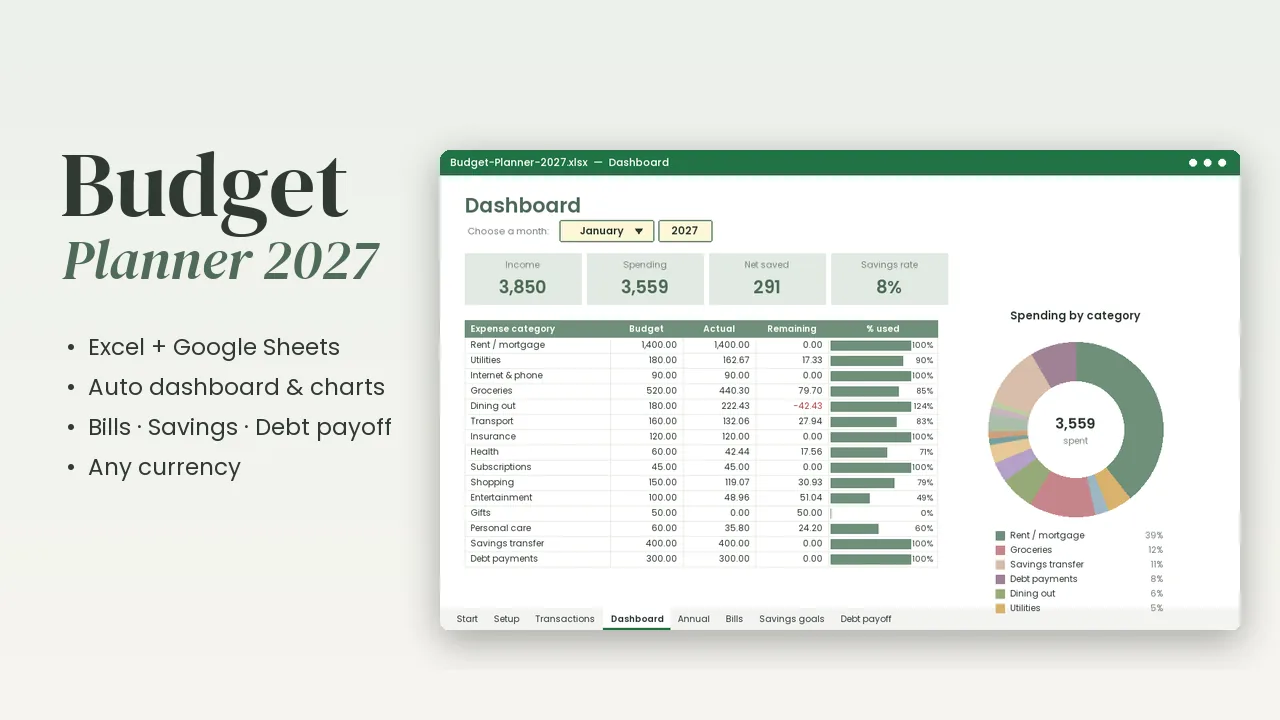
Budget Planner 2027 spreadsheet
Excel & Google Sheets: transaction log, monthly dashboard with charts, bills, savings goals and a debt payoff planner.